
Home 01 About 02 Objectives 03 Skills 04 Programme 05 Location 06 Partners 07 FAQ 08 Apply 09
Erasmus+ Youth Exchange · 2026

Y-Cycle

Turn ideas into impact. Build skills for a circular future.

An Erasmus+ Youth Exchange bringing together 37 young people from Greece, Portugal, Hungary and Romania to explore entrepreneurship, digital innovation, social impact and the circular economy.

  • Elafonisos, Greece
  • 23 Sep – 4 Oct 2026
  • 37 participants
  • 4 countries
  • Fully funded
Scroll
0
Activity days
0
People taking part
0
European countries
Elafonisos
Laconia, Greece
English
Working language
Erasmus+
Fully funded
About Y-Cycle

A cycle of ideas, skills and positive change

Y-Cycle is an Erasmus+ Youth Exchange created by Community Cohorts in Greece, together with partner organisations from Portugal, Hungary and Romania.

The project brings young people together to explore employment, entrepreneurship, social innovation, digital tools and the circular economy.

Through non-formal education, international teamwork and practical challenges, participants discover how their ideas can become realistic initiatives that create social, environmental and economic value.

The challenge

Why Y-Cycle matters

Across Europe, young people face the same crossroads. Y-Cycle responds to four connected challenges.

Youth unemployment

Many young people lack practical experience, professional guidance and access to real opportunities.
Limited access to resources

Young people may have ideas but lack networks, tools, confidence or knowledge about funding.

Digital skills gap

Modern work and entrepreneurship increasingly require digital literacy and familiarity with emerging technologies.

Environmental & social challenges

Future businesses and initiatives need to create value without ignoring communities or the environment.

Objectives

What we want to achieve

Eight connected goals that move each participant forward, from self-awareness to European opportunity.

01

Improve employability

Practical tools, knowledge and guidance that strengthen each participant's position in the labour market.

02

Develop an entrepreneurial mindset

Spot opportunities, turn ideas into projects and understand the basics of planning, finance and risk.

03

Strengthen confidence & resilience

Recognise your strengths, express your ideas and adapt to modern professional challenges.

04

Promote social entrepreneurship

See how enterprise can create positive social and environmental impact, not only financial profit.

05

Explore the circular economy

Sustainable models that reduce waste, reuse resources and create long-term community value.

06

Improve digital & AI skills

Hands-on with AI tools, CRM systems, project management, email automation and social media marketing.

07

Encourage intercultural cooperation

Build understanding, tolerance and solidarity through multicultural teamwork and shared experiences.

08

Connect to European opportunities

Discover programmes, networks and funding such as Erasmus+ and Horizon Europe.

How we learn

Learning by doing

You will not spend ten days listening to traditional lectures. Y-Cycle is based on active participation, experimentation, teamwork and learning from each other.

Team-building challenges

Role-playing activities

Entrepreneurship simulations

Circular economy workshops

AI & digital tool labs

Project development sessions

Public speaking & pitching

Intercultural evenings

Outdoor activities

Reflection groups

Community challenges

Youthpass reflection

Digital innovation

Technology as a tool for opportunity

Digital tools are not the centre of Y-Cycle, they are practical instruments. You will explore how technology can support professional development, entrepreneurship and social initiatives, while discussing responsible and ethical use.

Artificial intelligence

Understand what AI can and cannot do, and where it adds real value.

CRM systems

Manage relationships, contacts and communities in an organised way.

Project management

Plan tasks, deadlines and teamwork with modern platforms.

Email automation

Save time and reach people with smart, well-timed messages.

Digital collaboration

Work together in real time, wherever your teammates are.

Social media marketing

Tell your story and grow an audience for your initiative.

Online research

Find, check and use reliable information effectively.

Presentation & pitching

Turn a concept into a clear, convincing pitch.

Throughout Y-Cycle we keep asking the important question: how do we use these tools responsibly and ethically, so technology serves people and communities rather than the other way around?

Programme

Ten days of learning, creation & connection

The final programme, day by day. Tap a day to see what you will do.

Every day at Y-Cycle

Activities run 10:00–13:30 with a 30-minute break in the middle. Lunch at 14:00. Afternoon activities 17:00–20:00. The last half hour, 19:30–20:00, is our daily reflection circle and Youthpass diary. Midday is free for the sea.

  • Arrival & settling inWe welcome you at the camping, show you your tent or bungalow, and give you the practical information: Wi-Fi, electricity, safety, the sea.
  • Welcome & tourA short welcome circle with the Y-Cycle team and a walk around our spaces: the Agora (our meeting place), the team tables, the Studio, and the beach.
  • DinnerOur first meal together.
  • Getting-to-know-you eveningA relaxed evening at the camping to meet the other national teams.
  • Name gamesFast, fun games so that by lunch everybody knows everybody's name.
  • Team buildingChallenges you can only solve together, using the things we find at the camping.
  • Rules & expectationsWhat you need, what you fear, what you bring. Together we agree how we will live and work this week.
  • Youthpass & teamsA short introduction to Youthpass, the certificate of what you learn. We form the four mixed teams of the week and walk through the whole programme together.

Morning

  • Human or machine?Ten images, texts and song clips. Half are made by people, half by AI. You vote with your body, left for human, right for machine, and then we reveal the answer. We keep the group's score!
  • Short talk: where AI is todayWhat AI can do now (text, image, voice, video, code), where it fails, and the one skill of the whole week: describing exactly what you want.
  • The robot that knows nothingIn groups of three: one of you sees a picture and describes it, one draws it without seeing it, and one types the exact same words into Claude, which draws it too. Three rounds, so everybody tries every role. Then we compare all the drawings with the original picture: who described it best, and what was missing?
  • The prompt recipeThe theory of the day: a good prompt has six parts (Role, Goal, Context, Format, Example, Limits). You get them as six coloured cards that you will use all week.
  • Improve the descriptionBack to your AI drawings. Rewrite the description with the six cards, up to three times, until the AI gets as close as possible to the original picture. Score each round and see which card made the biggest difference. The best prompts go into your team's cookbook.

Afternoon

  • The literal robotSix teams, six tasks with camping objects: a frappé, a knot, a towel, a life jacket, a table, a backpack. Each team writes instructions for its task. Then the facilitator becomes a robot that does exactly what you wrote, and freezes at every unclear word. The other teams note which instruction broke the robot.
  • Discussion of the notesFor each of the six tasks, the observers read their notes and propose better instructions. We connect every suggestion to one of the six prompt cards, so the morning's theory is confirmed by the afternoon's practice.
  • Daily reflectionA circle with one word each, a short talk about what you keep, and three questions in your digital Youthpass diary: what did the AI understand differently from me, my prompt of the day, one question I still have.

Morning

  • Introduction to creativityWhat creativity is (something new and useful), how it is born (combining, limits, quantity before quality, trying again), and what changes with AI: the barrier is no longer the technical skill but the idea and the choice. We start with a test: how many uses can you find for a pebble in three minutes, first alone, then with AI?
  • Music I: SunoSix teams. Write your lyrics with a chatbot (theme, verses and chorus, one language or a mix), give them to Suno with a style, listen to two versions and choose one. Your song becomes the jingle of the podcast that follows.
  • Y-Cycle Radio: ElevenLabsWe show you ElevenLabs: voices, voice design, dubbing, and cloning your own voice with your permission. Each team plans and records a 5–10 minute podcast episode on a topic it cares about: your own voices from your phones, AI for the intro, the narrator, translations and effects, put together in a simple editor. One episode per team.

Afternoon

  • Keyrings & NFC: how it worksWhat we will make: a personal keyring printed on our 3D printer, with an NFC tag hidden inside. What NFC is, how your phone reads it, what fits inside a tag (a link or a short text), and a demo with a ready keyring. Printing takes hours. The keyrings are handed out on Monday or Tuesday.
  • Meshy: my objectChoose the object you want as your keyring and describe it to Meshy using the six prompt cards. Try until you get the shape you like, then send your final prompt to the facilitator for printing. Tip: let the shape hint at what the keyring will hide.
  • The tag's content: creating & writingMake the thing your keyring will open (a message, a poem, a voice note, your song or your episode) and write it into your tag with the NFC Tools app. Test it on two phones. Meanwhile the facilitators prepare the print files and start the first plate.
  • Listening session: Radio episodes + songsAll together at the camping we listen to the day's episodes and songs, with one minute of comment per team: what did the human do, what did the AI do. We vote for the Y-Cycle anthem. The printer works next to us.
  • Daily reflectionOne word each and three questions in your Youthpass diary: what did I make today that I could not make yesterday · where did I decide and where did the AI · which tool will I use again.
  • Free dayRest, sea, sun. The 3D printer keeps working.

Morning

  • Play & deconstruct18 cards with well-known games on the table: eight played with cards or paper, ten on the phone. In pairs or threes, pick one and open it up with six questions: what does the game remember (state), how does the player act (input), what changes when you act (rule), what do you see after (feedback), when do you win or lose (end), and how many players at what pace. A few pairs present in two minutes. This is the vocabulary of the day.
  • How does something go onlineA very simple explanation with one picture: the server is a referee with a notebook. Your two phones never talk to each other. They only talk to the referee, and the Wi-Fi is just the road to it. That is why an online game has a small delay: the phone asks “anything new?” every second. And that is why a single-player game needs none of this.
  • Demo: how I built Simos Parking BattleThe whole story of the example game: the prompts step by step, the graphics, the board on the real map of our camping, the accounts and the leaderboard, and the “How it was built” screen inside the game itself. Behind something impressive there are clear instructions in plain language, not magic.
  • Build Sprint IYour four teams each take a classic game and make your own version. First a paper prototype with cards and pebbles, so the rules are fixed before you spend ten prompts. Then the skeleton prompt, a test on two phones, then your own content. Rule: one change per prompt, bugs on the kraft paper.

Afternoon

  • Build Sprint IIGraphics and colours, a title screen, instructions inside the game, difficulty balance, fixes for what you found in the morning. Ends with publishing: a public link and a QR code for the evening.
  • Playtest Swap & TournamentTeams rotate and play each other's games, ten minutes per round, leaving a feedback card: what I liked, what I did not understand, one bug, one idea. The creators watch without explaining. If it needs explaining, that is a note for a fix. Then quick fixes and a tournament where everybody plays everything, with scores on the kraft paper.
  • AwardsThree categories: the most fun game, the best personal touch on a classic, and the best story behind the prompting (the team that tells best how it went from idea to result).
  • Daily reflectionOne word each and three questions in your Youthpass diary: what did I learn about how a game is built, where did the AI make it hard, what would I build again on my own.

Morning

  • “Works, but…”: presentation on the TVThe wooden house: one job, four tools, “three of them work, only one is right”. The four kinds of tool (right, works-but, too much, wrong job), how the situation changes the answer, and the bridge to AI.
  • AI tools and what job each one does30 actions: “I want to do this → this is the tool → not for that”. NotebookLM to learn from your own files, Perplexity and Deep Research for research, Claude for Chrome for jobs in the browser, Skills for tasks you repeat, and the rest, team by team.
  • The 5 families & profession cardsExtract, sort, write, research, schedule. Teams take one or two of 15 professions, put every step into a family, and really automate two of the steps, with made-up data.

Afternoon

  • My own processWrite down a process from your own life (school, work, a hobby), put every step into a family, automate one, and measure the time you save.
  • Design a digital businessA Business Model Canvas per team, with at least three automations from the morning and real customers, who will go into tomorrow's CRM. The last 15 minutes: the social turn. Make the same idea solve a problem, not only make money.
  • Organisations' Bazaar: Dragons' Den styleEach partner organisation presents its work and its opportunities, Dragons' Den style.

Morning

  • My secretaryFill in five cards: “If I had a secretary, I would ask them to…”. The cards go on the wall and group themselves: remember my notes, warn me about tomorrow, keep my contacts, tell me what I have today, find something I wrote a week ago. Vote with stickers. This sorted list is what the platform must do, and the first time each of you adds your own needs.
  • Human AppPlay the platform with your bodies: four of you are the database and hold cards, one is the server, the rest are screens that ask “write a note”, “what do I have tomorrow?”, “show my contacts”. The server asks for a password before it serves anybody. When Maria asks for “my notes”, the database gives only hers: that is private. When she asks for “the directory”, it gives everybody: that is shared.
  • Design togetherFrom the morning list come the “rooms” of the platform: Notes, Tasks & reminders, Contacts, Today (the secretary screen: what I have today and tomorrow), and Directory (shared). Each team takes one room and draws its screen on paper: what I see, what I press, which fields. This paper is your spec for Claude Code.
  • Feature sprints IThe foundations are ready: sign-up, login, an empty database. You build everything you can see. Each team works on its own copy, with Claude Code on the laptops, from its paper. Rules as on Monday: one change per prompt, test with made-up data, roles inside the team.

Afternoon

  • Feature sprints IIAssembly. One person from each team joins the tech runner to merge the five rooms into one platform and put it online. The others write the one-page “how to use it” guide in four languages and prepare what they will put inside.
  • Sign up to the live CRMThe moment of the day. Open the link on your phone, sign up with your own email and password, and add real things: three notes from the week, your tasks for tomorrow, five contacts from the exchange, your profile in the directory. The needs you wrote on cards this morning become data inside something you built yourselves.
  • App FairEach team shows its room in five minutes. Then everybody asks the secretary: “what do I have tomorrow?”, and the Today screen answers. Feedback cards, a vote for the most useful room, a wish list of what to add. And a promise: the platform stays alive after the exchange, as the shared tool of Y-Cycle.
  • ReflectionWhat I asked my secretary for in the morning and got in the evening · which part I understood by playing Human App · what I would add to the platform tomorrow.

Morning

  • The lineA rope on the sand, from “I completely agree” to “I completely disagree”. A sentence is read, you stand where you feel, and two or three people from each end explain. There is no right answer. Sentences like: “It's OK to write my mother's birthday message with AI” · “It's OK to post a friend's photo I changed with AI, if it's funny” · “AI will take my job” · “If the AI writes the essay, it's not mine” · “It's OK to have an AI as your best friend” · “I don't care what they do with my data”.
  • The scamEach team gets an envelope with six scenarios: a voice message “mum, I lost my phone, send 300 €”, a perfect email from the “Erasmus+ National Agency” asking you to verify your account, an ad “2,000 € a week from home, send your ID”, a video of a famous person promoting a crypto coin, a villa on Elafonisos at 40% of the price by bank transfer, and one that is real. You decide: real or scam, and what gave it away. From your findings we build the wall of warning signs: hurry, money, secrecy, “click here”, too good to be true, a new number, they ask for passwords or ID. The new defence is behaviour: stop, check through another channel, and agree a code word with your family. Then we show live how easy it is to clone a voice.
  • My tracesFirst, “what does a photo say”: we upload a photo taken on the island and ask the AI where and when it was taken. It often finds out. What do your own photos reveal? Then 35 minutes on your own phone, privately: which apps can use your location, microphone and camera; where the AI tools you use let you switch off training on your data; a check of your email on haveibeenpwned.com; two-step verification on one account. You leave having made three real changes, not having heard about them.

Afternoon

  • Intercultural afternoonAll together we cook dishes from our countries and have a barbecue day.

Morning

  • The AI interviews meThree rules for how to present yourself well, an interview with a ready-made prompt, and at the end your decisions: design, format, photo, and what to put first.
  • Europass CVPaste from your interview brief into the Europass platform. Your experience lines are already in the right form. Add Y-Cycle and Youthpass. Export as PDF, which goes on your page as a “download my CV” button. Rule: the AI polishes, it does not invent.
  • Build my page IThree people per laptop, about 25 minutes each for a first version. While you wait: prepare your photo, collect the links to what you made this week, and be the tester for the person next to you.

Afternoon

  • Build my page IISecond round: one fix per prompt, check at phone size, the links, the CV button. Before handing it in, check it against Thursday's rules: no phone number, no home address, no photos of others without their permission. The folder goes to the tech runner for upload.
  • Sunset portraits & NFC cardWrite your page's address into your NFC card with NFC Tools, test it, and then decorate the card. A portrait in the best light of the day can replace your morning photo.
  • ReflectionA circle and your Youthpass diary: what I learned about how I present myself · which proof from this week counts most · what I would write differently in a year.
  • Booklet editorsWe gather the week's work (games, the app, the websites, the creations) into the Y-Cycle digital guide.
  • Youthpass Altitude GaugeThe week's journey as a flight: every “flight level” is a stage of learning, mapped all together.
  • Final evaluationA questionnaire, the hot seat, movement in the space, a mental journey through the week.
  • Certificates & goodbyeYouthpass and certificates, dedications, and the group photo.
  • DepartureBreakfast, exchange of contacts, transfer to the ferry.
Location & practical info

Learning on a Greek island

Y-Cycle takes place on Elafonisos, a small island in Laconia known for its turquoise waters, sandy beaches and unique natural landscape. Away from everyday routines, the island is an inspiring place to focus on learning, creativity, teamwork and meaningful international connections.
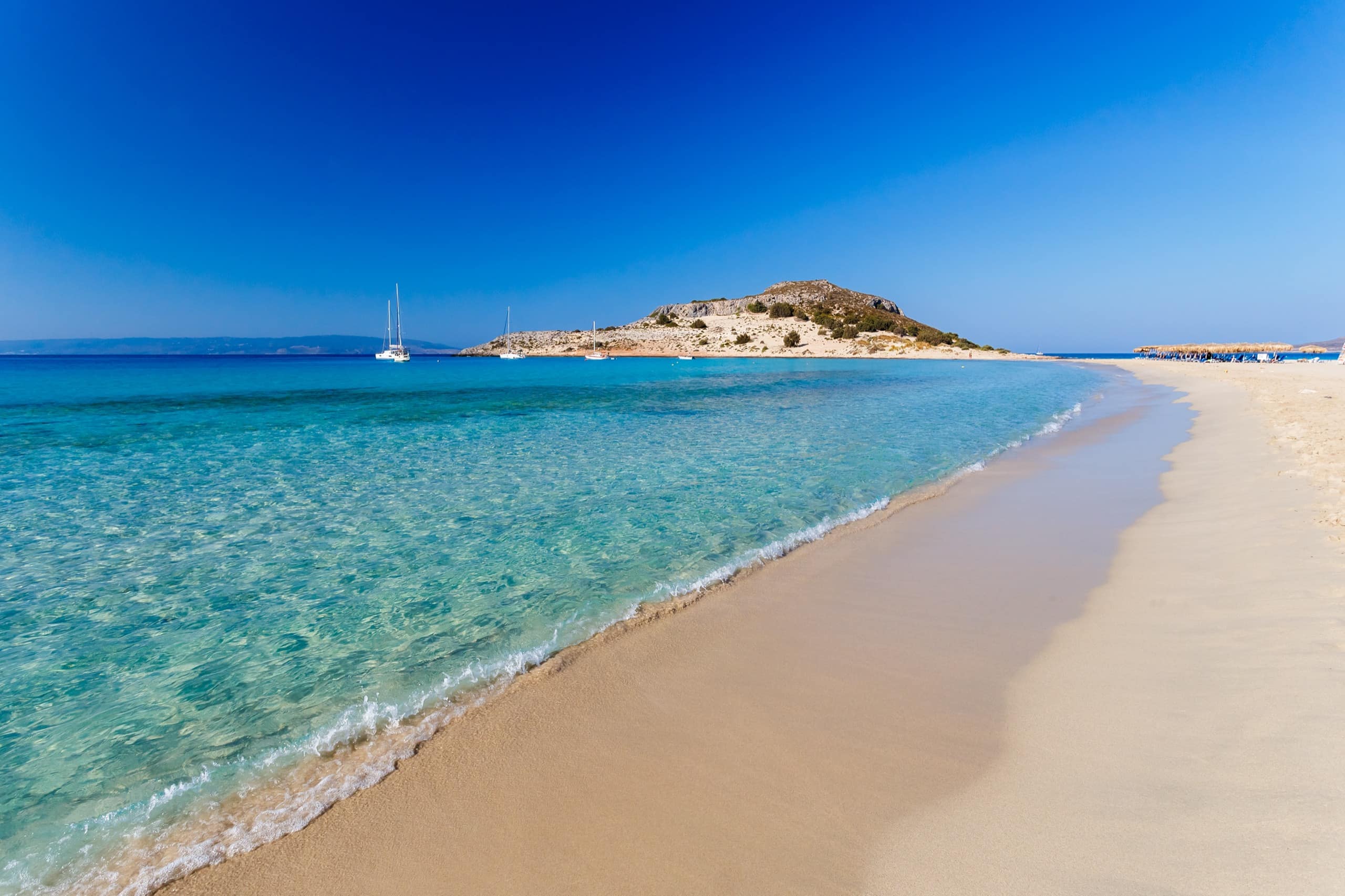
Simos Beach in Elafonisos with turquoise sea and white sand

Simos Beach, Elafonisos

One of the most beautiful beaches in Greece, minutes from where we live and learn.

Laconia, Greece
Where you'll stay

Glamping by the sea

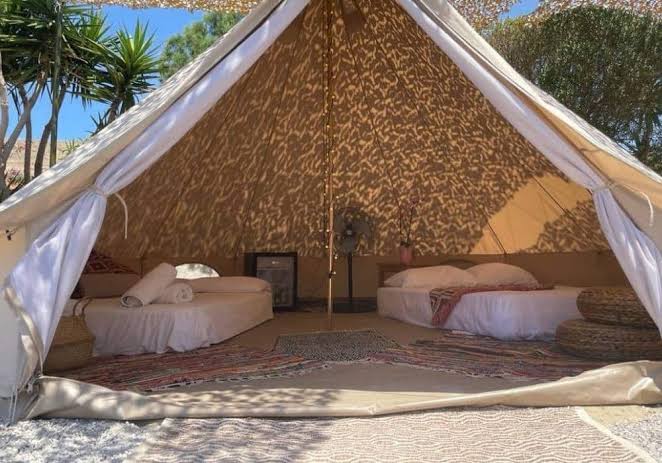
Accommodation is in comfortable furnished tents in a natural setting close to the beach, a simple, sustainable way to live together as one group and stay connected to the island.

Exact site details confirmed before arrival
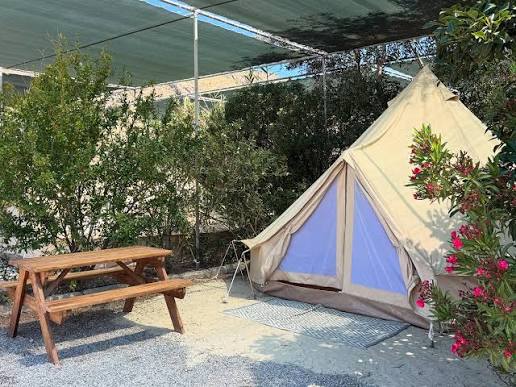
Furnished bell tent with a picnic table in a green, shaded setting
Your base between sessions
Inside a spacious bell tent with beds and rugs
Comfortable, shared tents

Camping

Simos Camping, by the famous Simos beach.

Accommodation

Everyone sleeps in their own single bed, two people per very comfortable glamping tent, with sheets, a sleeping bag and pillows provided.

Weather

Late September is usually sunny, around 21 to 25°C.

Getting there

A bus brings all participants together from Athens airport to Elafonisos.

Prepare for the experience

  • Arrival: 23 September 2026
  • Activities: 24 September to 3 October 2026
  • Departure: 4 October 2026
  • Simos Camping has a dedicated activity space, a supermarket, a restaurant, shared kitchens with fridges, a tennis court and an outdoor gym.
  • Beach: the famous Simos beach is about 4 minutes on foot, and we will have a shaded area there.
  • Town: the Chora is about 5 minutes by car; we will visit it at least twice on free afternoons.
See the campsite facilities

Meals are served inside the campsite, at the restaurant, with the following lunch and dinner menu.

See the menu

Participants' travel costs are covered according to the rules of the Erasmus+ programme and the European distance calculator.

Please keep the originals of your travel tickets (bus, train and flight receipts, boarding passes, and so on), because without these documents we cannot process your reimbursement.

The activity runs from 23 September to 4 October. The 23rd of September and the 4th of October are the arrival and departure days, so they count as travel days.

Please book your flights to arrive at Athens airport by 13:00 at the latest on 23 September, and to depart from Athens after 15:00 on 4 October. There is a specific ferry to Elafonisos and we do not want to miss it.

Participants who land at Athens airport are transferred to Elafonisos by a bus leaving from the airport, together with the Greek participants travelling from Athens, all together.

Can I arrive earlier and leave later than the specified dates?

Only after consultation can you arrive up to two days before the programme and leave up to two days after it, to stay in Athens.

This is possible if:

  • The tickets you find are cheaper
  • You cover the accommodation and meal costs for the extra days
  • The organisers have agreed to the arrangement
  • Accommodation, meals and local transfers during the project are fully covered.
  • International travel is reimbursed up to your Erasmus+ distance band cap (economy fares).
  • Keep and submit all originals: electronic tickets, boarding passes (both ways), receipts for buses or trains, and any baggage receipts.
  • Use taxis only when public transport is unavailable (keep a justification and receipt).
  • Reimbursements are processed after we receive the complete documents.
Travel reimbursement per participant
  • Hungary €239
  • Portugal €325
  • Romania €239
  • Greece €56 · green travel

The Athens to Elafonisos transfer costs €70 per participant in total. Please take this into account so that your flight tickets stay within your reimbursement cap.

Greece is typically around 25°C and sunny in the daytime; nights can be cooler (we sleep in tents).

  • Summer clothes, swimsuit & flip-flops
  • Hat, sunscreen, sunglasses, reusable water bottle, towel
  • Comfortable closed shoes for activities
  • 2 warm hoodies or jackets for the evenings
  • A laptop (we will use it often during the activities)
  • Personal medication
  • Passport/ID and (if applicable) EHIC or insurance

Sheets, pillows and sleeping bags are already provided, so you do not need to bring them.

The community

One international learning community

Four countries, four teams, one shared experience. Everyone arrives with something to offer and leaves with something new.

🇬🇷 Greece

  • Participants 8
  • Group leader 1
  • Organiser 1

🇵🇹 Portugal

  • Participants 8
  • Group leader 1

🇭🇺 Hungary

  • Participants 8
  • Group leader 1

🇷🇴 Romania

  • Participants 8
  • Group leader 1
0

37 people. 4 countries.
1 shared experience.

Partners

The organisations behind Y-Cycle

A partnership of four youth organisations, coordinated from Greece.
Community Cohorts

Host
Greece · Hosting & coordinating organisation

The informal youth group responsible for hosting and implementing Y-Cycle in Greece.

Recognition

Erasmus+ & Youthpass

Erasmus+

Erasmus+ is the European Union programme supporting education, training, youth and sport. Youth Exchanges allow young people from different countries to meet, learn together and develop skills through non-formal education.


Erasmus+ logo Youth and Lifelong Learning Foundation (INEDIVIM) logo

Youthpass

Youthpass is the European recognition tool used in Erasmus+ youth projects. During Y-Cycle, participants reflect on what they learn and receive a Youthpass certificate documenting their learning journey.

Youthpass logo
FAQ

Good questions, clear answers

An Erasmus+ Youth Exchange bringing together 37 young people from Greece, Portugal, Hungary and Romania to explore entrepreneurship, digital innovation, social impact and the circular economy through non-formal education.
On the island of Elafonisos, in Laconia, Greece. We will stay at Simos Camping, by the famous Simos beach. See the campsite facilities.
Arrival is on 23 September 2026 and departure on 4 October 2026, with activities running from 24 September to 3 October 2026.
Young people selected by each partner organisation from Greece, Portugal, Hungary and Romania. Specific eligibility is confirmed by your organisation. Editable
English. You don't need to be perfect, you just need to be willing to communicate and take part.
No. Y-Cycle is designed for young people at different stages. Curiosity, openness and a willingness to participate matter far more than experience.
Yes. Accommodation, meals and programme activities are covered through the Erasmus+ programme.
Travel reimbursement is provided according to Erasmus+ rules and the limits communicated by the partner organisations. Keep all tickets and boarding passes. Editable
All travel tickets, boarding passes and receipts related to your journey, plus a valid identification document and your European Health Insurance Card.
Yes. Please share any dietary requirements or allergies with your group leader in advance so we can plan meals for everyone.
A European recognition tool for Erasmus+ youth projects. You will reflect on your learning and receive a Youthpass certificate documenting your journey.
You are encouraged to apply your new skills, build networks, create initiatives, share knowledge in your community as a multiplier and explore further European opportunities.
Your group leader is your first point of contact. An emergency contact for the exchange will be provided before departure. Editable

The next cycle starts with you

Join an international community of young people who want to develop their skills, transform ideas into action and create a more sustainable future.

Applications

Apply to take part

Fill in the form below to express your interest in taking part in the project. Submitting an application is not an automatic confirmation of selection. The responsible organisation will contact you after the applications have been reviewed.

Fields marked with * are required.

Include your international dialling code.
Do you believe that any of the following statements apply to you?
Fill in only if needed.

Privacy notice

The information you submit will be used only to assess and organise your participation in this project. Only the organiser and the people authorised by the organiser will have access to the data. The data is not published or shared publicly.

You can request access to, correction of, or deletion of your data by contacting {{CONTACT_EMAIL}}.